HIPAA Ransomware Compliance

HIPAA Ransomware Compliance and the Critical Role of BullWall in Healthcare Cyber Resilience
In healthcare, cybersecurity is no longer just an IT issue; it's a boardroom issue. The rise in ransomware attacks targeting electronic protected health information (ePHI) has elevated the stakes for HIPAA ransomware compliance, patient safety, and reputational risk. At the same time, HIPAA regulations demand strict accountability for how ePHI is accessed, protected, and reported on when compromised.
BullWall Ransomware Containment isn't a full HIPAA compliance solution--but it plays a vital role in helping healthcare organizations defend against ransomware, reduce regulatory exposure, and maintain the integrity of critical systems.
This article explores what ransomware protection means in today's cyber landscape. We explore how modern attacks work, where traditional security controls may fall short, and how automated containment can lead to true ransomware resilience.

Why Ransomware Is a HIPAA Risk Multiplier
Under HIPAA, if ePHI is encrypted, exfiltrated, or rendered unavailable due to a cyberattack, organizations may be required to report the incident (often publicly) within 60 days. These breaches can lead to:
- Hefty financial penalties
- Damaging headlines
- Loss of patient trust
BullWall helps mitigate this risk by detecting and containing ransomware in real time, before ePHI is lost or systems are brought down.
How BullWall Aligns with Key HIPAA Ransomware Compliance Safeguards
1. Access Control (164.312(a)(1))
BullWall identifies and stops unauthorized encryption attempts by compromised users or insider threats. Once detected, it automatically isolates infected devices or accounts, preventing further damage.
Business value:
BullWall prevents ransomware from compromising financial systems, clinical data, or patient records.
2. Audit Controls (164.312(b))
BullWall Ransomware Containment captures comprehensive logs of file activity, including which users accessed which files and when. These logs are essential for:
- Post-incident investigations
- Demonstrating compliance
- Responding to audits
Business value:
BullWall enables detailed forensics and supports regulatory documentation.
3. Data Integrity (164.312(c)(1))
BullWall prevents ransomware from encrypting or corrupting ePHI in the first place, preserving data availability and accuracy.
BUSINESS VALUE:
BULLWALL MINIMIZES DISRUPTION TO PATIENT CARE AND ENSURES CONTINUITY
4. Unauthorized Encryption Prevention (164.312(e)(2)(ii))
While BullWall doesn't handle encryption of ePHI itself, it plays a crucial defensive role by stopping unauthorized encryption that could make data inaccessible and trigger breach notification obligations.
BUSINESS VALUE:
BULLWALL REDUCES THE LIKELIHOOD OF HIPAA-REPORTABLE EVENTS.
5. Helping You Avoid a Reportable HIPAA Ransomware Compliance Breach
Under the HIPAA Breach Notification Rule (45 CFR §§ 164.400-414), organizations must notify regulators, media, and affected individuals if a breach impacts more than 500 patients. BullWall helps organizations contain incidents to a single user or a handful of users by:
- Automatically isolating the attack
- Providing logs that demonstrate data was not accessed or exfiltrated
BUSINESS VALUE:
BULLWALL SUPPORTS PROACTIVE BREACH ASSESSMENT AND MAY ELIMINATE THE NEED TO REPORT ALTOGETHER.
Summary: BullWall's HIPAA-Relevant Contributions
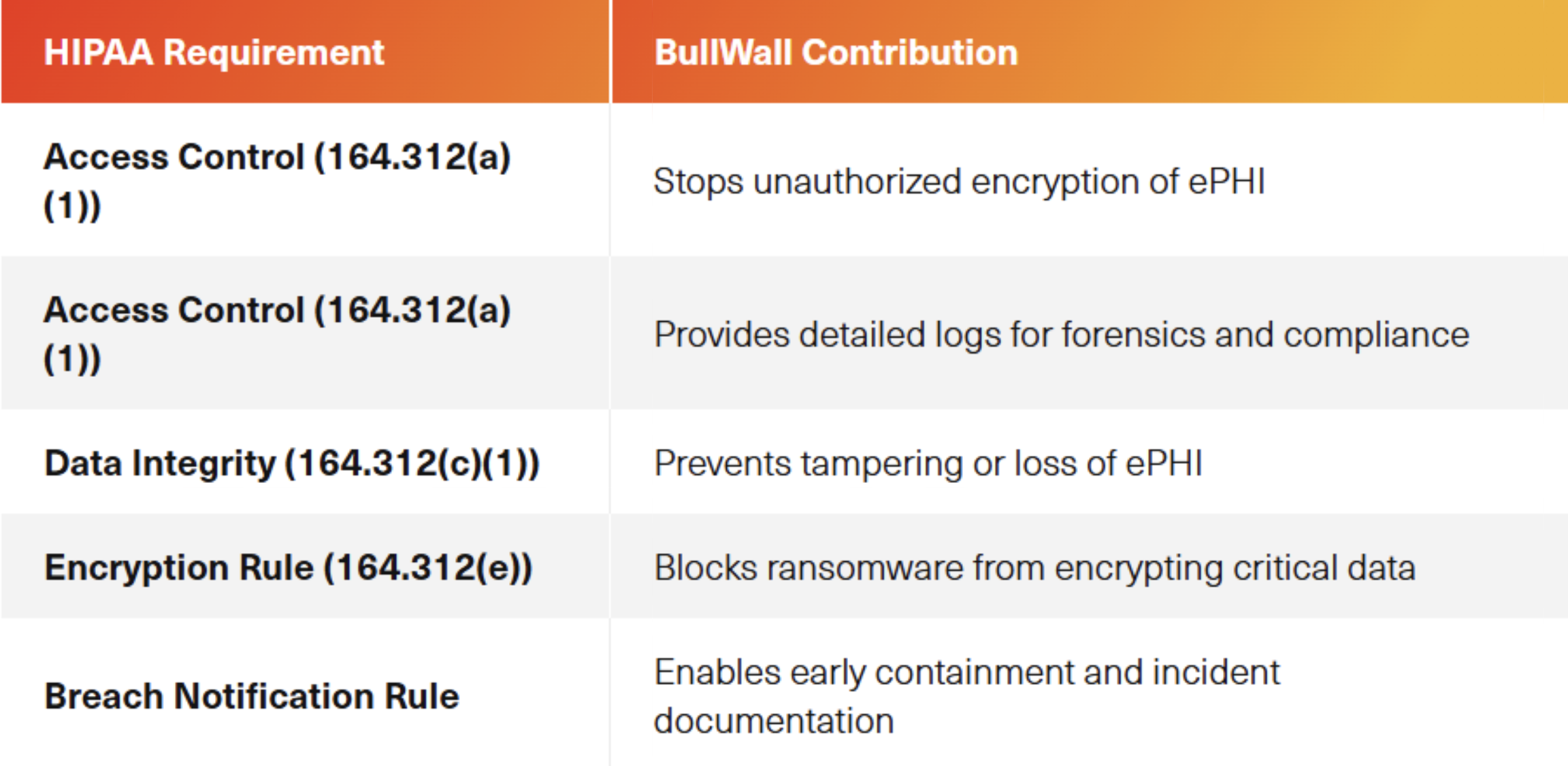
The C-Suite Takeaway: Risk Reduced, Resilience Elevated
Healthcare organizations can no longer rely solely on traditional defences to stop ransomware. With BullWall, they gain an intelligent containment layer that:
- Protects ePHI in real time
- Supports technical safeguards for HIPAA ransomware compliance
- Reduces the impact and likelihood of reportable breaches
- Provides the evidence executives need to defend regulatory and public trust
In a regulatory environment where "we didn't know" isn't a defence, BullWall gives leaders the visibility, control, and speed they need to stay ahead of cyber threats.