Why Ransomware Backups Alone Do Not Deliver Resilience

Ransomware backups are not a resilience strategy.
When ransomware strikes, leadership teams instinctively turn to one capability to restore operations: backups.
Backups are essential to the business. But a ransomware backup strategy alone is not true protection, nor does it equate to operational resilience.
In modern ransomware attacks, backups are often deliberately targeted, corrupted, or encrypted first. Ransomware operators increasingly seek out and delete backup files, compromise administrative credentials, and disable replication to cloud storage. In many documented cases, organizations believed they had reliable backups, only to discover that they were encrypted or inaccessible when needed most.
And even when backups remain intact, they offer no help while the attack is actively unfolding.
The message is simple: backups recover data, but they do not stop ransomware. A complete ransomware resilience strategy requires a containment layer between EDR and backups.
PROTECTION IS ABOUT KEEPING THREATS OUT. RESILIENCE IS ABOUT CONTINUING TO OPERATE WHEN THREATS GET IN.
Without that layer, organizations face a familiar and damaging scenario. With no clear visibility into what was encrypted, teams are forced to restore entire environments because the blast radius is unknown. Recovery becomes guesswork: identifying patient zero, dealing with partial or outdated ransomware backups, and managing prolonged downtime that quickly escalates into operational paralysis.
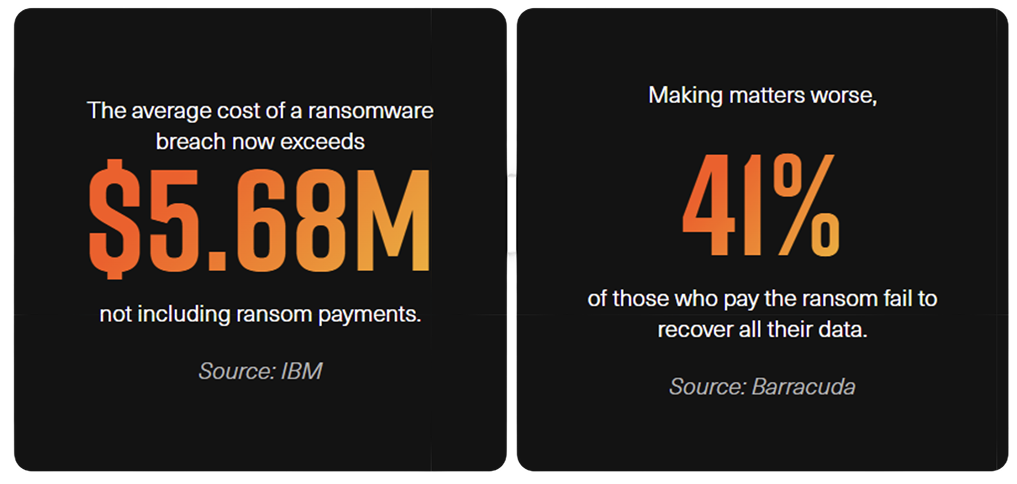
BACKUPS HELP YOU RECOVER EVENTUALLY. CONTAINMENT IS WHAT KEEPS YOU OPERATIONAL NOW.
Endpoint Security Still Matters, But It Cannot Protect Backups Alone
Endpoint security remains a critical component of any cyber defense strategy. It excels at what it was designed to do: blocking known threats, analyzing behavior, and stopping suspicious processes.
But ransomware has evolved faster than preventative controls.
Today's attacks routinely succeed through:
- Convincing social engineering
- Legitimate or stolen credentials (attackers log in, they do not break in)
- Zero-day exploits
- Fileless techniques that evade signatures
- Encryption executed inside trusted processes
WHEN A TRUSTED USER CLICKS THE WRONG LINK OR VALID CREDENTIALS ARE ABUSED, THE ATTACK CAN STILL STILL SUCCEED EVEN WHEN ENDPOINT CONTROLS PERFORM EXACTLY AS EXPECTED.
In BullWall's internal penetration testing, over 99 percent of simulated ransomware attacks successfully bypass EDR defenses, often using techniques that avoid triggering standard alerts until encryption has already begun.
Once encryption begins, it spreads at extreme speed. Some ransomware variants can encrypt 100,000 files in under five minutes. By the time alerts are raised, the damage is already done.
Endpoint tools are a vital front line, but they were never designed to be the last line.
The Missing Layer Between Prevention and Recovery
This is the gap ransomware consistently exploits, and the gap BullWall was purpose-built to close.
BULLWALL OPERATES BETWEEN PREVENTATIVE SECURITY CONTROLS AND BACKUP SYSTEMS, ACTIVATING THE MOMENT ENCRYPTION BEGINS TO PRESERVE OPERATIONAL CONTINUITY.
It is purpose-built ransomware containment, designed on the assumption that a threat will eventually bypass prevention, but that it should not be allowed to disrupt operations, productivity, or customer trust.
While most security solutions focus on prevention or recovery, BullWall addresses the critical moment in between: the window where ransomware is already encrypting files, and immediate action is required to prevent widespread damage.
What BullWall Delivers: Sub-Second Containment
- Sub-second detection of abnormal encryption behavior
- Automated isolation in milliseconds, not minutes
- Containment limited to the compromised machine, not the entire network
- Full forensic visibility into every encrypted file, in sequence, by process
BullWall detects, contains, and halts active ransomware attacks, without relying on known patterns, signatures, or endpoint agents. It is the control that ensures a successful breach does not escalate into a business-wide outage.
Making Your Existing Security Investments Work
Most organizations have already invested heavily in cybersecurity: endpoint tools, SOC operations, identity controls, and backups.
BullWall does not replace these investments. It ensures they deliver results when they are needed most.
INDUSTRY CONSENSUS HOLDS THAT IT IS NO LONGER A MATTER OF IF YOU WILL BE ATTACKED, BUT WHEN.
With BullWall in place, when an attack bypasses preventative controls:
- The blast radius is reduced to a single affected user
- Encryption is stopped before it spreads
- False positives do not bring productivity to a halt
- Security, IT, and leadership teams gain immediate clarity
BullWall transforms a collection of security tools into a coordinated defense framework. For a deeper look at building comprehensive protection, see our guide to ransomware resilience.
From Recovery Guesswork to Operational Precision
One of the greatest contributors to extended downtime is uncertainty: what was encrypted, where it started, and how far it spread.
BullWall removes that uncertainty.
Backup and recovery teams gain:
- A complete, timestamped inventory of encrypted files
- Clear identification of the initial compromise
- Confidence in what requires restoration and what does not
The result is measurable improvement: dramatically reduced disruption during a crisis with no loss of operations.
Ransomware Is a Business Continuity Risk, Not Just a Cyber Risk
For today's leadership teams, success is measured by how quickly the business can absorb disruption and continue operating.
BOARDS, REGULATORS, AND CUSTOMERS EXPECT ORGANIZATIONS NOT JUST TO PREVENT ATTACKS, BUT TO CONTAIN THEM RAPIDLY AND RECOVER WITH PRECISION.
With BullWall, organizations achieve:
- Immediate response when encryption begins
- Minimal operational disruption
- Faster recovery and reduced downtime
- Greater return on existing security investments
- Confidence that a ransomware attack will not become a business catastrophe
Ransomware has evolved. Business continuity strategies must evolve with it.
The New Standard for Ransomware Defense
Prevention matters. Recovery matters.
But the most critical gap lies between them.
BullWall closes that gap with real-time containment, decisive visibility, and accelerated recovery, ensuring ransomware does not dictate business outcomes.
If you want to strengthen your ransomware backup strategy and protect continuity when prevention fails, our team is ready to engage.